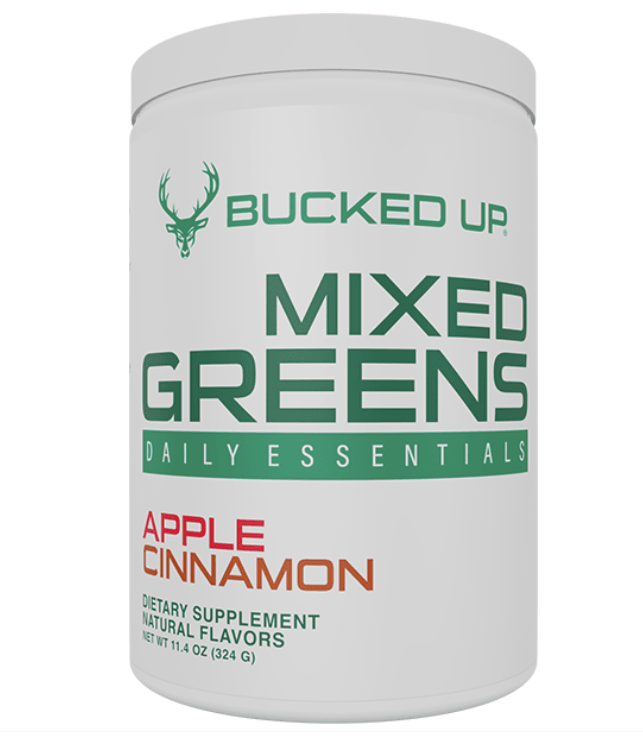
Straight-up daily greens with a solid 2,250mg kale base
Bucked Up Mixed Greens keeps it simple with eight straightforward plant ingredients instead of a huge list of barely-there superfoods. The idea here is clear: load up on big doses of cereal grasses and kale, then back them with smart amounts of cruciferous veggies, leafy greens, and algae. You get a wide greens mix that boosts nutrient density, antioxidants, chlorophyll-packed plants, and everyday health support, not some quick performance kick.
The heavy hitters are at the top. Barley Grass at 2,275mg and Wheat Grass at 2,250mg give that classic greens powder vibe: grasses full of vitamins, minerals, and plant compounds that help with daily health and filling nutrition gaps. They added Kale at 2,250mg, which is spot on in the 1,800-2,250mg range from studies. Kale stands out here. It brings lutein and zeaxanthin for eye protection against oxidation, vitamin K for bone health processes, and a mix of potassium, magnesium, and plant stuff that supports blood flow and metabolism. In real life, this is one of the few ingredients dosed right to match what research shows.
Alfalfa at 625mg hits the high end of its useful range. It adds more nutrients, chlorophyll, vitamin K, and antioxidant compounds without any big immediate wow. Broccoli at 500mg is a solid dose for a whole-food powder. Broccoli shines because of glucoraphanin, which turns into sulforaphane and kicks off the Nrf2 pathway (that's your body's way of ramping up natural antioxidants and detox enzymes). One key downside: the label doesn't disclose
Key Highlights
- 2,250mg Organic Kale — this dose steals the show and fits right in the 1,800-2,250mg range from studies. It's not just for show; it packs lutein, zeaxanthin, vitamin K, and dense nutrients that help with eyes, bones, and blood flow.
- 2,275mg Barley Grass — one of the biggest doses here and a key part of the chlorophyll-packed greens foundation. This makes Mixed Greens feel like a legit daily greens powder, not some lightly sprinkled superfood list.
- 2,250mg Wheat Grass — pairs perfectly with barley grass for a hefty cereal-grass base. It widens the whole-food greens vibe and shows the kind of real dosing that beats out hidden blends in other products.
- 625mg Alfalfa — right at the top of its useful range, adding chlorophyll, vitamin K, and antioxidant plant compounds. Nothing flashy, but it's a smart secondary pick in the mix.
- 500mg Broccoli — a good whole-food dose that adds cruciferous support via glucoraphanin. That's what links to sulforaphane and Nrf2 signaling (your body's natural defense boost), making it a sharp choice for daily greens.
- 500mg Spinach — at the lower end of its range, but it brings another real leafy green to the table beyond just grasses. It adds nitrates, carotenoids, and extra nutrients, even without being a high-nitrate extract.
- 300mg Spirulina — lower than the big doses in studies, so think of it as backup, not the star. It still throws in phycocyanin-rich algae for more antioxidant variety.
- 300mg Chlorella — also light compared to standalone research, but it adds value for overall mix. Teaming it with spirulina makes this more than a basic grass powder.
Who Is This For?
- Busy folks training 3-5 days a week but veggies slip on long days, trips, or skipped meals. This gives a easy greens base with 2,275mg barley grass, 2,250mg wheat grass, and 2,250mg kale — no buzz or huge hidden blends.
- Everyday gym peeps fixing basics before fancy stacks. It focuses on real greens and cruciferous support with a clear label, so you know what's in it — not exotic traces.
- Athletes bulking or cutting when meals repeat and variety drops. Kale, broccoli, spinach, and grasses help keep phytonutrients up even on chicken-rice loop.
- People wanting a daily wellness powder for off days too. No stimulants, no loading — just greens to boost consistency.
- Folks who hate hidden blends and want full disclosure. This lists every green's amount, a big plus in a shady category.
- Those eating okay but wanting greens insurance, not a meal swap. It adds concentrated plants like solid kale, broccoli, and spinach to back your diet.
How to Use
Take one serving every day, same time to make it habit. Mornings work for most to knock out greens early, but anytime's fine if it sticks. Shake it in cold water for smooth mixing — better than stirring. If greens are new or your stomach's picky, start with half for a few days to check comfort, then go full. It's easiest with or after food, and some fat helps absorb kale's compounds. Stacks great with creatine, protein, fish oil, or a multi — it fills the plant side without overlap. No tolerance build-up, so no cycling. Keep it sealed, cool, and dry to avoid clumping.
What to Expect
Minutes 0-10: you taste the greens and texture, no energy kick. It's plant stuff, so it's about drinking it down, not a rush. Minutes 10-40: no performance spike to chase, but it goes down easier cold and sipped. Hours 1-6: the win is nutrition — you're loading up on barley grass, wheat grass, kale, broccoli, spinach, alfalfa, spirulina, and chlorella. Days 1-7: you notice steadier habits, especially if veggies are hit-or-miss. Weeks 2-4: this shines with regular use, building a solid base of greens nutrients over relying on perfect eating. Don't expect a wow feeling; it's for closing gaps consistently.
Key Ingredients
-
Barley Grass — 2275mg — High-dose grass base for daily greens consistency
-
Wheat Grass — 2250mg — Dense cereal-grass nutrition in a meaningful amount
-
Kale — 2250mg — Clinical-range kale for antioxidant and micronutrient support
-
Alfalfa — 625mg — Top-range alfalfa for chlorophyll and vitamin K support
-
Broccoli — 500mg — Cruciferous support tied to Nrf2 antioxidant pathways
-
Spinach — 500mg — Leafy-green support with nitrate and carotenoid potential
-
Spirulina — 300mg — Adds blue-green algae diversity to the blend
-
Chlorella — 300mg — Microalgae support for broader nutrient coverage
Frequently Asked Questions
What are the main ingredients in Bucked Up Mixed Greens?
The formula contains eight disclosed greens: Barley Grass 2,275mg, Wheat Grass 2,250mg, Kale 2,250mg, Alfalfa 625mg, Broccoli 500mg, Spinach 500mg, Spirulina 300mg, and Chlorella 300mg. The largest part of the formula is the grass-and-kale base, which gives the product its core nutritional identity.
Is Bucked Up Mixed Greens fully transparent or does it use a proprietary blend?
It is fully transparent based on the verified formula provided. Every active ingredient and its dose is listed, which is a major advantage in the greens category where many brands hide dozens of ingredients inside undisclosed blends.
Is the kale dose in this formula actually meaningful?
Yes. Kale is included at 2,250mg, which aligns with the top of the cited 1,800-2,250mg clinical range from the knowledge base. That makes it one of the most legitimately dosed ingredients in the entire formula.
Are the spirulina and chlorella doses high enough to match standalone clinical studies?
No, not as standalone algae doses. Spirulina and chlorella are both included at 300mg, while much of the human research on these ingredients uses multiple grams per day. They still add breadth to the formula, but they are supporting ingredients here rather than fully clinical standalone doses.
When is the best time to take Bucked Up Mixed Greens?
The best time is the time you will use it consistently. Most people do well taking it in the morning or with a meal, and taking it with some dietary fat can make practical sense for absorption of fat-soluble carotenoids from ingredients like kale.
Will I feel this product working right away?
Not in the way you feel a pre-workout. This is a daily greens product, so the benefit is nutritional consistency rather than an acute rush or stimulant effect. The real payoff comes from regular use over weeks, not minutes.
Can I stack Bucked Up Mixed Greens with creatine or protein?
Yes, and that is one of the best use cases for it. Creatine supports phosphocreatine replenishment, protein supports muscle repair and growth, and Mixed Greens covers the plant-based micronutrient side that many training-focused stacks miss.
Is this product good for digestive support?
It can help indirectly by making greens intake more consistent, but it is not a dedicated digestive formula with enzymes or probiotics. Think of it as a greens foundation first, not a specialized gut-health product.
Who should be cautious with this formula?
People taking blood thinners should be especially cautious because kale and alfalfa contribute vitamin K-related plant compounds. Those with grass sensitivities, digestive sensitivity to greens powders, or immune-related medical conditions should also consult a healthcare professional before use.
How does this compare to typical greens powders with huge ingredient lists?
This formula is much simpler and easier to evaluate. Instead of promising 30-50 ingredients at undisclosed doses, it gives you eight clearly disclosed greens with most of the formula concentrated in barley grass, wheat grass, and kale, which is more honest and easier to assess against the research.